Stopwatch vs. Pomodoro: Why Count-Up Focus Works Better for Deep Flow
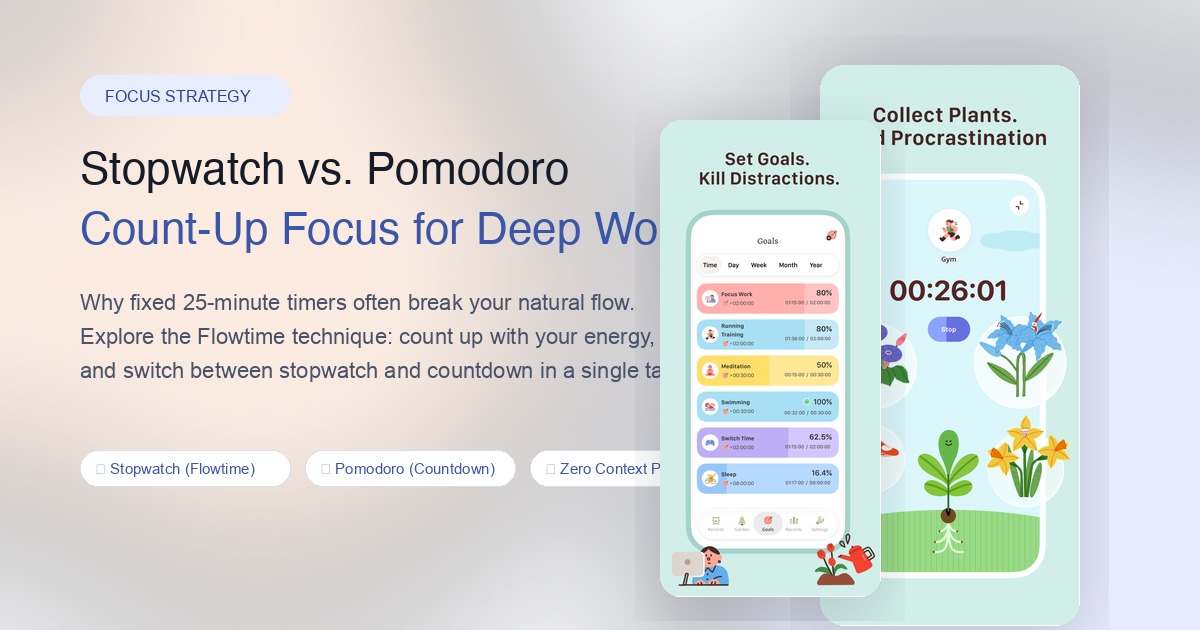
If you have ever looked up productivity tips, you have inevitably encountered the Pomodoro Technique: set a timer for 25 minutes, work without stopping, take a 5-minute break, and repeat.
It is simple, structured, and widely celebrated. But if your work involves programming, complex writing, creative design, or deep strategic planning, you have likely run into its most frustrating flaw:
You spend the first 10 minutes settling down and loading context into your head. By minute 18, you finally break through your resistance. At minute 23, ideas are firing on all cylinders—you are in genuine flow state.
BEEP. BEEP. BEEP.
The timer goes off. You are told to stop, walk away, and grab a glass of water. If you stop, you shatter your cognitive flow. If you ignore the timer, you defeat the entire purpose of using a structured timer in the first place.
This tension is why an increasing number of knowledge workers are switching from countdown timers to count-up timers (the Flowtime Technique).
Here is how both methods compare, why counting up often wins for deep work, and how to choose the right mode for your day.
The Flaw in the 25-Minute Countdown
The Pomodoro Technique was invented in the late 1980s by Francesco Cirillo using a mechanical kitchen tomato timer. It was designed primarily to solve one problem: task initiation friction. When a task feels massive or intimidating, knowing you only have to endure it for 25 minutes makes it much easier to start.
However, modern creative and analytical work requires substantial cognitive "ramping up":
- Context Switching Costs: Research in human-computer interaction shows it can take between 15 to 23 minutes to fully recover deep concentration after an interruption. Forcing a break right as you hit top speed introduces artificial friction.
- Artificial Time Urgency: Watching minutes count down to zero can induce background anxiety. Instead of focusing outward on the problem, part of your brain monitors the ticking clock.
- Mismatched Natural Rhythms: Human focus operates in natural ultradian cycles—typically peaking anywhere between 45 to 90 minutes. A rigid 25-minute cutoff truncates natural endurance.
What Is the Flowtime Technique? (Count-Up Focus)
The Flowtime Technique was developed as a direct answer to Pomodoro fatigue.
Instead of counting down from an arbitrary number, you start a stopwatch and let it count up.
The rules are wonderfully straightforward:
- Choose one specific task.
- Press Start on your count-up timer. Note the start time.
- Work until you naturally lose steam. You might work for 32 minutes, 54 minutes, or 78 minutes.
- Pause the timer the moment you feel genuinely fatigued or distracted.
- Take a proportional break:
- $\le 25$ minutes of work: 5-minute break
- $25 - 50$ minutes of work: 8–10-minute break
- $50 - 90$ minutes of work: 15–20-minute break
By flipping the clock from counting down to counting up, you stop asking "How much time do I have left?" and start asking "How deep into this problem can I go?"
Head-to-Head: Pomodoro vs. Flowtime
| Dimension | Pomodoro (Countdown) | Flowtime (Stopwatch / Count-Up) | | :--- | :--- | :--- | | Primary Mechanism | Fixed countdown (typically 25m / 50m) | Open-ended count up (tracks natural stamina) | | Best Used For | Overcoming procrastination, routine chores, admin tasks | Deep coding, essay writing, creative design, research | | Break Trigger | Timer alarm forces a halt | You pause when focus naturally wanes | | Cognitive State | Sprints with structured discipline | Deep, uninterrupted immersion (flow state) | | Psychological Feeling| Urgency and finite boundaries | Expansive, pressure-free absorption |
When to Use Which: A Quick Decision Framework
You don't have to pledge allegiance to one method forever. In fact, the most effective productivity systems treat both as complementary tools in the same toolbox:
Use Classic Pomodoro (Countdown) When:
- You are procrastinating heavily: When starting feels impossible, a tiny 15-minute or 25-minute countdown lowers the activation energy.
- Doing tedious admin work: Answering routine emails, filling out expense reports, or clearing an inbox. The ticking clock prevents you from lingering.
- You are physically exhausted: When your energy is low, strict short intervals protect you from burning out.
Use Flowtime / Stopwatch (Count-Up) When:
- Doing complex problem solving: Writing code, architecting a system, or drafting an original paper.
- You are already excited to work: When inspiration hits, an alarm is an enemy, not a friend.
- You have ADHD hyperfocus: Neurodivergent individuals frequently experience sustained, powerful hyperfocus once engaged. A stopwatch honors that natural momentum.
How TimeGrow Solves the Dilemma
Most focus apps force you into a corner: they are either rigid Pomodoro-only timers or generic, clinical stopwatches that look like track-and-field tools.
In TimeGrow, we built both into the same gentle interface with a single tap:
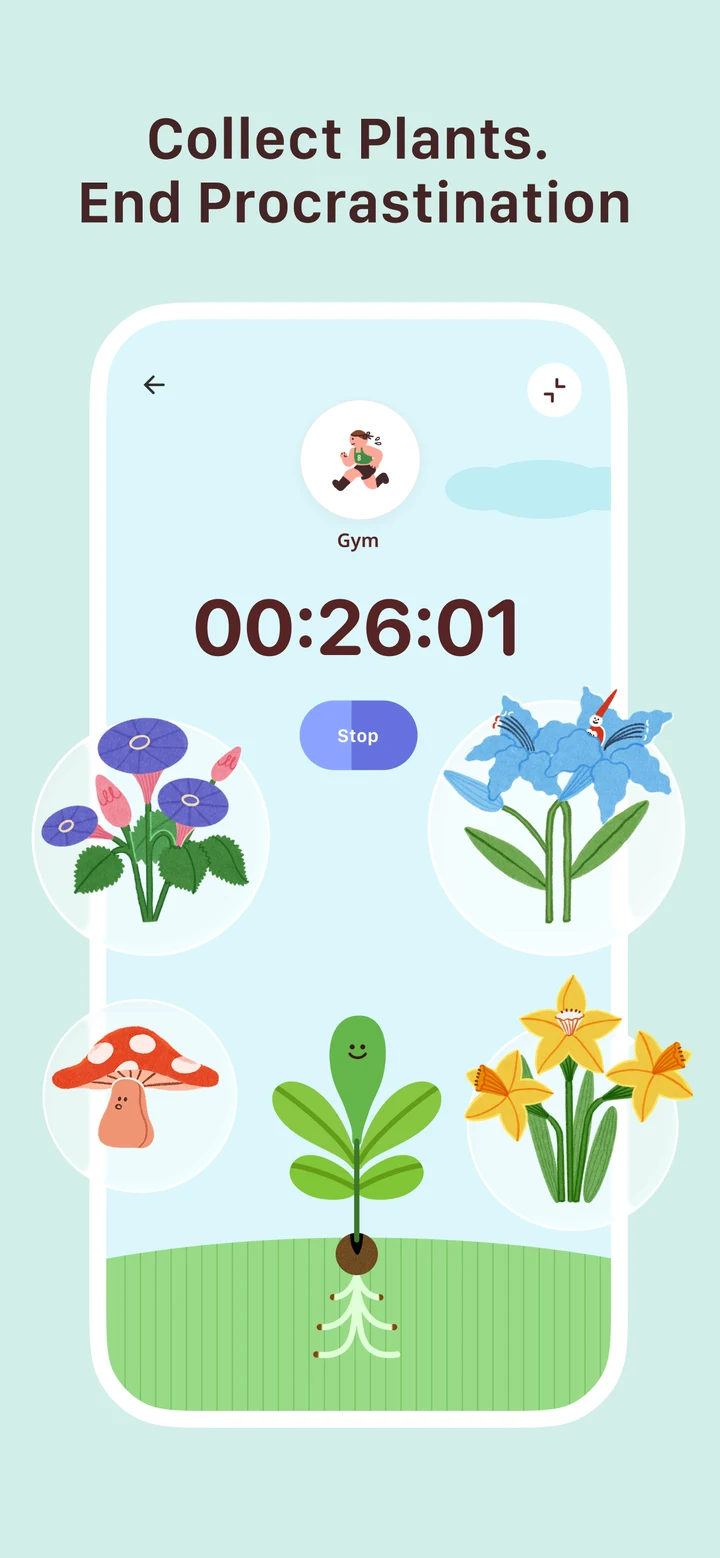
- 正计时 (Stopwatch Mode): Count up smoothly while gentle plant animations bloom quietly in the background. Stop whenever you choose.
- Pomodoro Mode: Set your customized countdown (25, 45, or 60 minutes) when you need an accountability nudge.
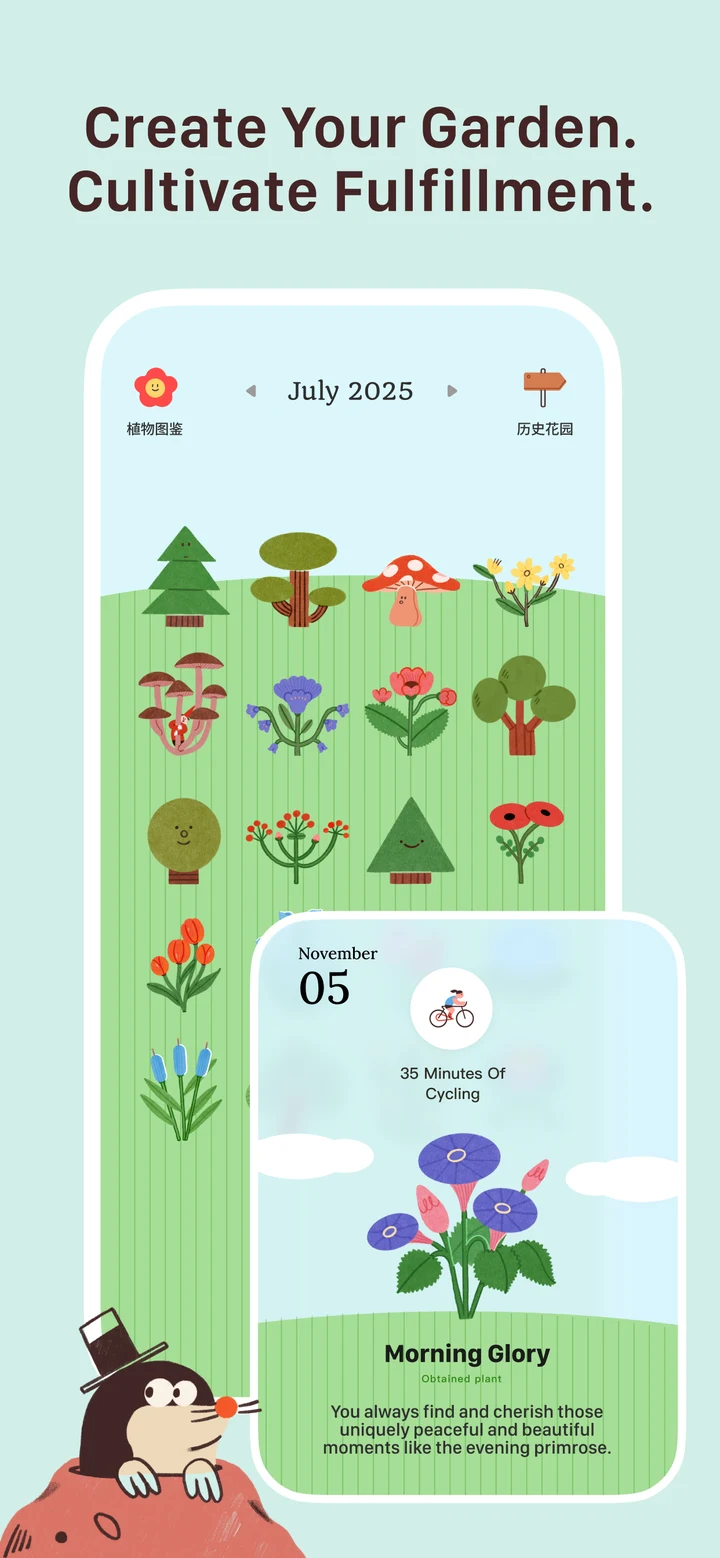
- Zero Penalty Transitions: Whether you work for 12 minutes or 82 minutes, your time is translated into blooming flowers in your daily garden.
Try a 7-Day Flowtime Experiment
Curious whether count-up tracking works better for your brain? Try this simple 7-day protocol:
- Pick your primary deep-work task each morning.
- Start a stopwatch (on your phone widget or our online Deep Work timer).
- Turn your phone face down. Let the timer run silently without watching the seconds tick.
- Log your natural stopping points for one week. You will quickly uncover your personal "focus sweet spot"—whether it is 42 minutes or 65 minutes.
Once you know your natural rhythm, you can design your days around your actual biology instead of an arbitrary tomato timer.
Want to try gentle, count-up focus today? Download TimeGrow on the App Store or launch our free online focus timer.